Is Your HOA Dog Park Safe? A Quick 3-Step Hygiene Check
Is Your HOA Dog Park Safe? A Quick 3-Step Hygiene Check

Hey there, fellow neighborhood heroes! If you’re a property manager or on your HOA board, you know that July isn't just about fireworks and pool parties. It’s also about that other thing. You know what I’m talking about, the "mid-summer simmer."
When the mercury hits 90 degrees, your community dog park can go from a puppy paradise to a bacterial breeding ground faster than a Greyhound on a squirrel chase. Trust me, I’ve spent enough time with my boots on the grass to know that "summer funk" is real. Between the baking sun amplifying odors and the sheer volume of "deposits" left behind during peak play hours, keeping things hygienic is a full-time job.
But don't sweat it (well, maybe a little, it is July). I’ve put together a quick, 3-step hygiene check to ensure your park stays safe, smells fresh, and keeps those resident complaints at zero. Let's dive into the nitty-gritty of commercial dog waste management so you can get back to your iced coffee.
Step 1: The "Station Sensation" Audit
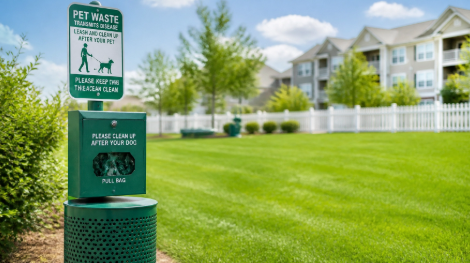
The first line of defense in any solid pet waste management for HOAs plan is your waste stations. If your residents don't have the tools, they aren't going to do the work. It’s that simple.
Walk your park today and look at your stations through the eyes of a frustrated dog owner. Are the bags actually there? Are the bins overflowing? Is the "Pick Up After Your Pet" sign faded and sad-looking?
- Bag Check: In the July heat, high-traffic parks need a restock 2–3 times a week. If a resident reaches for a bag and finds an empty dispenser, that waste is staying on the ground. No more "I forgot a bag" excuses!
- The Bin Factor: Emptying the bins once a week might work in January, but in July? That's a recipe for a fly-fest. Ensure your bins are emptied at least twice weekly and that the lids actually close. A closed lid is your best friend for odor control.
- Signage Refresh: Use friendly, punchy signs. Instead of a list of "Thou Shalt Nots," try something like, "Grab a bag, save a shoe!" It works, I promise.
Clean. Simple. Done.

Step 2: Turf Talk – Ground & Surface Assessment
This is where things get a bit more "science-y." Whether you have real grass, artificial turf, or decomposed granite, the summer sun is doing a number on it.
Bacteria like E. coli and Salmonella love a warm, moist environment. If waste sits too long, it leeches into the soil. If it’s on artificial turf, it gets trapped in the backing. Here’s what you’re looking for:
- The "Brown Spot" Check: On real grass, urine burn is common, but "mystery mush" is the enemy. If you see areas that look perpetually damp or discolored despite the heat, you’ve got a bacteria problem.
- Turf Temperature: Artificial turf can get incredibly hot in July. If it’s too hot for your hand, it’s too hot for paws. Check for adequate shade or consider a professional rinsing schedule to keep temperatures, and bacteria levels, down.
- The Rinse Routine: For high-traffic urine zones (usually near the entrance or the favorite "peeing tree"), a simple hose-down isn't enough in 90-degree weather. You need specialized, pet-safe enzymatic cleaners that actually break down the uric acid.
No more brown spots. No more bacteria. No more worries.

Step 3: The "Sniff Test" (Odor & Bacteria Control)
Let’s be real: your nose is your best diagnostic tool. If you can smell the dog park from the clubhouse, you’ve missed the window for "preventative maintenance."
Odor isn't just a nuisance; it’s an indicator of organic material that hasn't been properly cleared. In the summer, odors travel further and faster. Here’s how to pass the sniff test:
- Professional Deodorizing: Standard cleaning often just masks the smell. Professional dog waste removal services use commercial-grade, eco-friendly deodorizers that neutralize odors at the molecular level.
- Daily Sweeps: If your park serves more than 50 dogs, you should be doing a daily sweep of "orphan" piles. Even the most diligent residents miss a few, and those "misses" are what cause the July stink.
- Audit the Drainage: Check the areas around your water fountains. Standing water + dog waste = a mosquito and bacteria cocktail. Ensure there’s no pooling water where dogs (or kids!) might step.
Fresh. Safe. Healthy.

Why "DIY-ing" Your HOA Park is a Summer Trap
I get it. You want to save the association money. But here’s the truth from someone who’s seen the "before and after": handling a community park’s waste management in-house usually ends up costing more in the long run.
Between the cost of bags, the labor of your maintenance crew (who probably have better things to do than scoop poop in 100-degree weather), and the potential liability of a resident’s pet getting sick, the math just doesn't add up.
Hiring a professional dog waste removal service means:
- Liability Reduction: Most pros provide a log of service, proving your HOA is taking proactive steps for community health.
- Resident Satisfaction: Happy dogs, happy owners, fewer nasty emails in your inbox.
- Consistency: A pro doesn't "forget" to check the bag dispensers because it’s too hot outside.
At Dog Waste Directory, we’ve made it incredibly easy to find the right team for the job. You don't even need to create an account. Just pop in your ZIP code and get quotes from local experts who specialize in commercial dog waste management.

Get Your Park Back on Track Today
You’ve got a community to run and a summer to enjoy. Don't let a stinky, unsafe dog park be the thing that keeps you up at night. Take ten minutes today to walk the park, run through this 3-step check, and see where you stand.
If the "July Simmer" is winning, it’s time to call in the cavalry. Head over to our search page to find a local provider who can take the "poop" off your plate.
Whether you need a one-time deep clean or a regular weekly maintenance plan, we’ve got your back. Let’s keep our neighborhoods clean, our pets safe, and our summer breezes smelling like... well, anything but a dog park.
Locate. Scoop. Clean.
FAQ: HOA Dog Park Management
How often should we empty pet waste bins in the summer? At a minimum, twice weekly. In extreme heat, the odor from a single day's waste can become overwhelming, and bins can quickly become a breeding ground for flies and pests.
Is artificial turf safe for dog parks in high heat? It is, provided it is maintained! You should regularly rinse it and use pet-safe infills that don't absorb as much heat. Many commercial dog waste management companies offer turf-specific sanitizing services.
Are dog waste bags provided by the HOA a "luxury" or a necessity? In my experience, they are a necessity. Providing bags increases owner compliance by over 80%. It’s the single most effective way to keep your grounds clean.